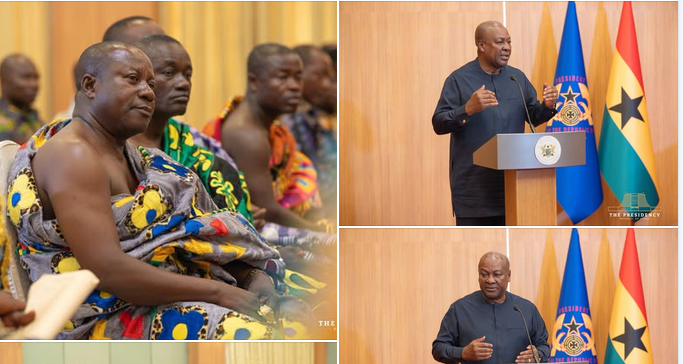
President John Dramani Mahama has received a delegation from the Western North Regional House of Chiefs at the Presidency to discuss regional development, infrastructure, economic growth and the government’s New Economy Policy.
The delegation, led by traditional leaders, visited the Presidency to congratulate the President on his victory in the 2024 general election, acknowledge development initiatives in the region and present concerns requiring government attention.
The meeting provided an opportunity for discussions on development priorities and the role of traditional authorities in supporting economic transformation across Western North and Ghana as a whole.
Mahama Outlines the New Economy Policy
During the engagement, President Mahama outlined the government’s New Economy Policy, which aims to move Ghana beyond economic stabilisation towards increased production, job creation, wealth generation and sustainable economic growth.
The government has indicated that the broader programme will involve approximately US$10 billion in investment over five years, with further details expected to be presented through the 2027 Budget.
The initiative is intended to support investment in priority sectors, strengthen local industries and expand opportunities for businesses and workers across the country.
Construction Sector Identified as a Source of Jobs
President Mahama also highlighted the importance of the construction sector in Ghana’s development agenda.
Construction projects can support employment for skilled and unskilled workers while creating opportunities for contractors, engineers, suppliers, artisans and small businesses.
The government’s infrastructure programme is expected to contribute to regional connectivity and economic activity, although the impact will depend on effective implementation, funding and timely completion of projects.
Traditional Leaders’ Role in Regional Development
The meeting also highlighted the importance of cooperation between government and traditional authorities in addressing local development challenges.
Traditional leaders often serve as important links between communities and public institutions, particularly on issues involving land, infrastructure, livelihoods and community welfare.
Their engagement with government provides an opportunity to communicate local concerns and identify areas where coordinated action may support development.
Calls for Inclusive and Sustainable Growth
The discussions reflect the broader importance of ensuring that national economic policies translate into practical benefits for communities across Ghana.
For Western North, development priorities include improving infrastructure, expanding economic opportunities and supporting initiatives that can strengthen livelihoods and create sustainable employment.
The effectiveness of these plans will ultimately depend on implementation, accountability and continued engagement with communities and their traditional leaders.