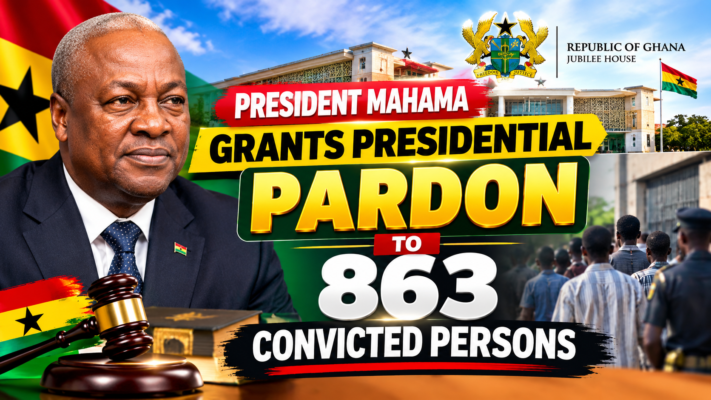
President John Dramani Mahama has granted presidential pardon to 863 convicted persons as part of Ghana’s 70th Independence Anniversary commemoration, in an exercise described by the Presidency as an act of mercy and national reflection.
The President exercised the prerogative of mercy under Article 72(1) of the 1992 Constitution, following consultation with the Council of State. The decision was announced on Monday, October 5, 2026.
819 First Offenders Granted Outright Release
The largest category of beneficiaries comprises 819 first offenders, who have been granted outright release.
The decision also covers other categories of convicted persons based on age, health condition, sentence status, special recommendations and petitions.
Elderly and Seriously Ill Convicted Persons Included
Under the presidential pardon, 13 persons aged 70 years and above have been granted outright release.
A further six seriously ill convicted persons have also been granted outright release as part of the exercise.
Death Sentences Commuted to Life Imprisonment
The exercise also includes sentence commutations.
The death sentences of 11 convicted persons have been commuted to life imprisonment, while six life sentences have been commuted to 20-year definite sentences.
Other Categories Covered
The official breakdown indicates that two persons received outright release under special recommendations, while three cases were considered under petitions.
Another three beneficiaries fall under the “Others” category, bringing the total number of beneficiaries to 863.
State Institutions Directed to Implement Decision
The Presidency has directed the relevant state institutions to take the necessary steps to give effect to President Mahama’s decision.
The exercise forms part of the President’s constitutional authority to exercise mercy in appropriate cases following the required consultation with the Council of State.
Act of Mercy and National Reflection
According to the Presidency, the presidential pardon is intended to mark the independence anniversary with an act of mercy and national reflection.
The decision places emphasis on compassion and rehabilitation while recognising different circumstances among the beneficiaries.