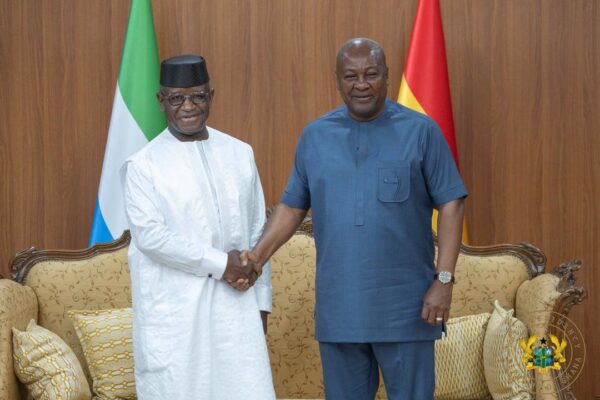
ACCRA, Ghana – President John Dramani Mahama has welcomed the President of Sierra Leone, His Excellency Julius Maada Bio, to Ghana during a one-day state visit focused on strengthening bilateral relations, enhancing regional cooperation, and addressing the growing impact of climate-induced disasters across West Africa.
President Bio, who currently serves as Chairman of the ECOWAS Authority of Heads of State and Government, used the visit to express solidarity with the people of Ghana following the devastating floods that recently affected several communities across the country.
President Bio Expresses Sympathy Over Ghana Flood Disaster During bilateral discussions at the Jubilee House, President Julius Maada Bio conveyed his deepest condolences to the Government and people of Ghana over the tragic loss of lives and widespread destruction caused by the recent floods.
He reaffirmed Sierra Leone’s solidarity with Ghana and emphasized the importance of regional unity in responding to natural disasters and humanitarian emergencies.
President Bio noted that climate change continues to pose serious challenges across West Africa and called for stronger cooperation among ECOWAS member states to improve disaster preparedness, climate resilience, and sustainable urban planning.
Mahama Outlines Government’s Flood Response President Mahama briefed his Sierra Leonean counterpart on the government’s ongoing emergency response efforts following the floods.
He disclosed that the Ghana Armed Forces and the Joint Task Force have been deployed to assist with rescue operations, clear blocked waterways, restore damaged infrastructure, and support affected communities.
According to the President, the Minister for Finance has also released funds from the Contingency Fund to finance emergency relief operations being coordinated by the National Disaster Management Organisation (NADMO) and other state agencies.
President Mahama revealed that preliminary assessments indicate that approximately 48,000 people have been displaced, 12 people have lost their lives, while several others remain unaccounted for as search, rescue, and relief efforts continue across the affected areas.
He assured Ghanaians that government remains fully committed to providing humanitarian assistance and implementing long-term flood mitigation measures.
Regional Security and ECOWAS Integration Beyond the flood situation, the two leaders held extensive bilateral consultations on issues affecting the ECOWAS sub-region, including regional security, democratic governance, economic integration, and sustainable development.
The discussions also served as preparations ahead of the upcoming ECOWAS Summit scheduled to be held in Sierra Leone.
President Mahama reiterated Ghana’s commitment to supporting ECOWAS initiatives aimed at promoting peace, political stability, economic growth, and stronger cooperation among member states.
Climate Change Requires Collective Action Both Presidents agreed that the increasing frequency of climate-related disasters demands stronger regional collaboration.
They emphasized the need for coordinated investments in climate adaptation, flood control infrastructure, disaster risk management, and sustainable urban development to protect lives and livelihoods across West Africa.
The leaders also called for enhanced cooperation between governments, development partners, and international organizations in tackling the long-term effects of climate change.
Ghana and Sierra Leone Reaffirm Strong Bilateral Relations The state visit concluded with both leaders reaffirming the longstanding friendship between Ghana and Sierra Leone and pledging to deepen cooperation in areas including trade, security, education, infrastructure, and regional integration.
President Mahama described the visit as another important step toward strengthening ECOWAS unity and advancing a shared vision of peace, stability, prosperity, and sustainable development across West Africa.
President Bio expressed confidence that continued collaboration between Ghana and Sierra Leone would contribute significantly to the progress of the ECOWAS community and the welfare of its citizens.