Reactions
Social commentator Bongo Ideas has shared an extended commentary on the ongoing road infrastructure developments across Ghana, drawing attention to major construction activities currently ongoing in several regions, particularly the Ashanti Region.
According to him, the scale of road works being observed suggests that both government institutions and road contractors are actively engaged in delivering infrastructure improvements nationwide. He noted that many of the projects visible on major highways and urban roads reflect increased activity and supervision compared to previous periods.
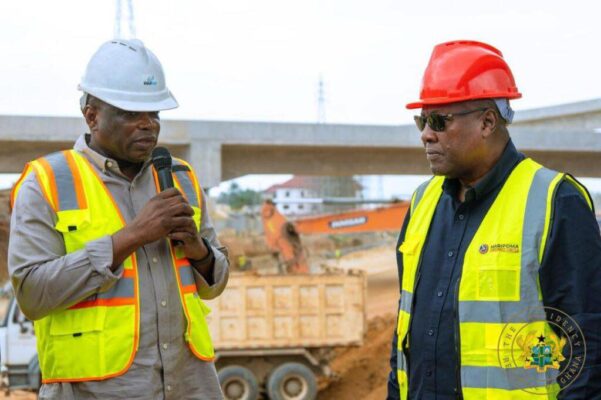
He further praised the Roads Minister, describing him as one of the most visible and hands-on officials in recent times.
“He is always on the road, inspecting projects, pushing contractors, and making sure work doesn’t just stay on paper. That level of presence is rare,” he stated.
Beyond the development progress, the commentator also raised concerns about the political interpretation of such projects. He suggested that even with visible infrastructure improvements, public opinion could still become divided along political and emotional lines.
He argued that in the long run, narratives may emerge that challenge or reinterpret who deserves credit for ongoing developments. In his view, some critics may attempt to downplay the role of government institutions while attributing achievements to other influential figures, including traditional leadership such as Otumfuo Osei Tutu II.
He also referenced the possibility of political debates involving figures such as John Dramani Mahama and the National Democratic Congress, suggesting that infrastructure discussions in Ghana often become politically sensitive regardless of on-the-ground progress.
According to him, such competing narratives can sometimes overshadow the actual work being done, leading to misinformation, politicization of development, and public confusion.
Public Reaction
Following his remarks, social media discussions have been mixed. Some users agree with his assessment that infrastructure development is often politicized, while others argue that credit for national projects should be based strictly on documented implementation and official accountability.
Others have called for a more balanced national conversation that focuses on monitoring, transparency, and continuity of development projects regardless of political administration.
Conclusion
The commentary highlights the broader challenge of separating development achievements from political interpretation in Ghana’s public discourse. While visible road construction continues across the country, debates over credit, responsibility, and narrative framing remain ongoing in the public space.
The discussion continues to generate engagement online as citizens share differing views on infrastructure development and political communication in Ghana. Bongo Ideas