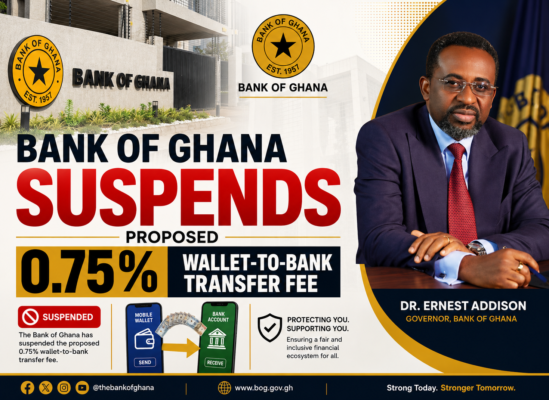
The Bank of Ghana has suspended the proposed 0.75 percent charge on direct wallet-to-bank transfers following growing public concern and calls for broader stakeholder engagement.
In an official press release issued on May 26, 2026, the central bank announced that Mobile Money Fintech Limited (MMFL) has been instructed to immediately pause the implementation of the fee, which was originally scheduled to take effect on June 1, 2026.
The decision comes after widespread discussions among mobile money users, businesses, digital finance operators, and sections of the Ghanaian public who feared the new charge could increase the cost of financial transactions and place additional pressure on consumers already dealing with economic challenges.
BoG Responds to Public Pressure
According to the Bank of Ghana, the suspension is intended to allow for further consultations and ensure that any future changes within the mobile financial services sector are introduced fairly and responsibly.
The central bank stressed that protecting consumers and supporting financial inclusion remain top priorities, especially as mobile money continues to serve millions of Ghanaians across the country.
“This decision reflects our commitment to ensuring that any changes to charges in the mobile financial services ecosystem are introduced fairly, protect consumers, and support their financial wellbeing,” the statement noted.
Concerns Over Rising Digital Transaction Costs
The proposed 0.75 percent fee quickly became a major topic of national discussion after reports emerged that customers would be charged for direct wallet-to-bank transfers.
Critics argued that the policy could discourage digital financial transactions and negatively affect small businesses, traders, and ordinary citizens who rely heavily on mobile money services for daily activities.
Some financial analysts also warned that introducing additional transaction costs could undermine efforts to promote cashless payments and financial inclusion in Ghana.
Relief for Mobile Money Users
Following the announcement, many Ghanaians expressed relief on social media, praising the Bank of Ghana for listening to public concerns and temporarily halting the policy.
Business owners, market traders, and mobile money agents described the suspension as a positive move that could help maintain confidence in digital payment systems.
Observers say the decision highlights the growing influence of public opinion in shaping financial and economic policies within the country.
Further Consultations Ahead
The Bank of Ghana has indicated that broader stakeholder consultations will continue before any final decision is taken regarding the proposed fee structure.
Industry experts believe the upcoming discussions will involve telecom operators, fintech companies, banks, consumer groups, and financial regulators.
The outcome of the consultations is expected to play a major role in determining the future of digital transaction policies in Ghana’s rapidly expanding financial technology sector.
As Ghana continues its push toward a cashless economy, many citizens will be closely watching developments surrounding the proposed transfer fee and any future decisions by regulators. Bank of Ghana Dr. Asiama’ NDC