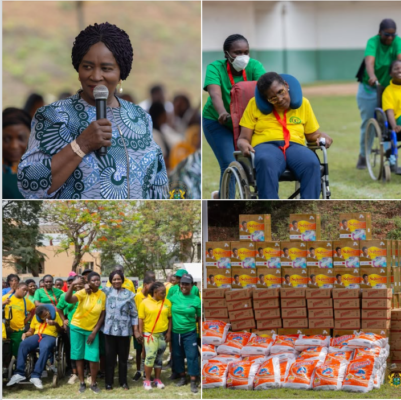
Vice President Professor Jane Naana Opoku-Agyemang has expanded efforts to tackle menstrual health challenges by donating 40,000 boxes of sanitary pads to schools in the Upper West Region. The initiative is being widely praised as a significant step toward improving girls’ education and well-being in underserved communities.
The donation forms part of a growing national conversation around period poverty, a persistent issue affecting thousands of schoolgirls, particularly in rural areas. Many girls miss several days of school each month due to lack of access to sanitary products, limited awareness, and inadequate sanitation facilities.
During her address, the Vice President highlighted the government’s ongoing commitment to promoting gender equality in education. She stressed that empowering girls through education requires practical interventions that address everyday challenges, including menstrual health.
“This is about dignity, confidence, and opportunity,” she stated. “When we support our girls in this way, we are investing directly in the future of our country.”
The Ministry of Education, in collaboration with the Ghana Education Service, will oversee the distribution process to ensure that the supplies reach the most vulnerable schools. Officials say priority will be given to districts with higher dropout rates among girls.
Health professionals have also welcomed the initiative, noting that it goes beyond education by contributing to better hygiene practices and reducing health risks associated with poor menstrual management.
Local leaders in the region described the donation as a “lifeline,” especially for families who struggle to afford basic sanitary products. Community members believe the intervention will not only keep girls in school but also help reduce stigma around menstruation.
In addition to the donation, the Vice President announced plans to integrate menstrual hygiene education into school programs. This will include sensitization campaigns aimed at both boys and girls to promote understanding and eliminate discrimination.
Development partners and advocacy groups have called for sustained efforts, urging authorities to consider long-term solutions such as local production of affordable sanitary products and improved water and sanitation infrastructure in schools.
The initiative is expected to benefit tens of thousands of students across the region, marking a meaningful stride toward inclusive and equitable education in Ghana.