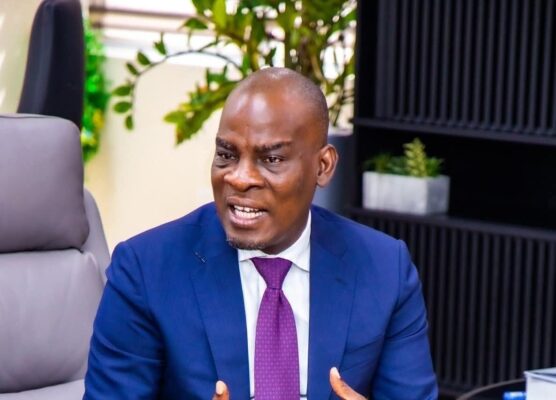
Comments by Ghana’s Education Minister, Haruna Iddrisu, regarding excessive bail conditions have sparked debate following media reports highlighting his criticism of actions by the police, courts, and the Economic and Organised Crime Office (EOCO).
The controversy emerged after reports focused on Haruna Iddrisu’s concerns that excessive bail requirements could amount to an abuse of power and undermine the rights of individuals who have not been convicted of any crime.
However, some supporters and political observers have argued that the minister’s remarks were taken out of context and failed to reflect the broader message he delivered during the funeral of the late Dr. Mahama Shaibu, a lecturer at the University for Development Studies (UDS), board member of the National Communications Authority (NCA), and a longtime associate of the minister.
According to accounts of the speech, Haruna Iddrisu recalled an incident during the administration of former President John Agyekum Kufuor when approximately 200 NDC supporters were arrested in Tamale following disturbances and were denied bail.
As a lawyer and Member of Parliament at the time, he said he pursued multiple bail applications on behalf of the detainees but was unsuccessful until the matter was escalated to a higher court.
The minister reportedly used the experience to emphasize a long-held legal principle that bail should not be used as a form of punishment against suspects who have not been found guilty by a court of law.
Supporters of Haruna Iddrisu argue that his comments were intended as a broader reflection on justice and due process rather than a direct attack on the current administration.
They contend that focusing solely on a headline about condemning excessive bail conditions fails to capture the historical context and legal arguments he presented during the funeral gathering.
Others have defended the minister’s position, noting that he has consistently spoken against practices he considers unfair regardless of which political party is in government.
The issue has generated discussion within political circles, with some observers linking the reactions to broader internal and external political rivalries.
While supporters insist the minister was advocating for fairness within the justice system, critics maintain that public officials must be cautious in how their remarks are communicated and interpreted.
The debate highlights continuing discussions in Ghana regarding due process, bail conditions, media responsibility, and the role of public commentary in shaping political narratives.
As reactions continue, the episode has once again drawn attention to the relationship between political figures, media organizations, and public perceptions in Ghana’s evolving democratic landscape. Haruna Iddrisu . EOCO